Certification
For the FAA to accept a newly built, US, experimental aircraft as airworthy, the owner must complete a three step, FAA mandated process. This process starts even before the building starts.
First, the owner must search the FAA directory of all ID numbers, also called "tail numbers' or "N-numbers" since all US registrations start with the letter "N" by agreement with the International Civil Aeronatics Organization (ICAO). After the owner finds an unassigned number that he likes, he can pay the FAA the princely sum of $5.00 to reserve that ID number. This reservation is good for two years. Reserving an N-numbers does nothing more than keep it out of the hands of any other builder. If the build is not completed within the two year window, then five more dollars will extend the reservation for another two years.
We were aiming to see if there was any chance that we could recover the original N-number that had been assigned to the first Roadrunner balloon in 1973. Luck was with us. We found that a previous fixed wing owner of "N1979R" in Texas had let their reservation lapse. We immediately paid our $5.00 and it was ours! That N-number had evidently belonged to several different aircraft after the 1973 balloon was de-registered. Note: All the early balloons manufactured by Raven balloons had "R" as the final character in the N-number.
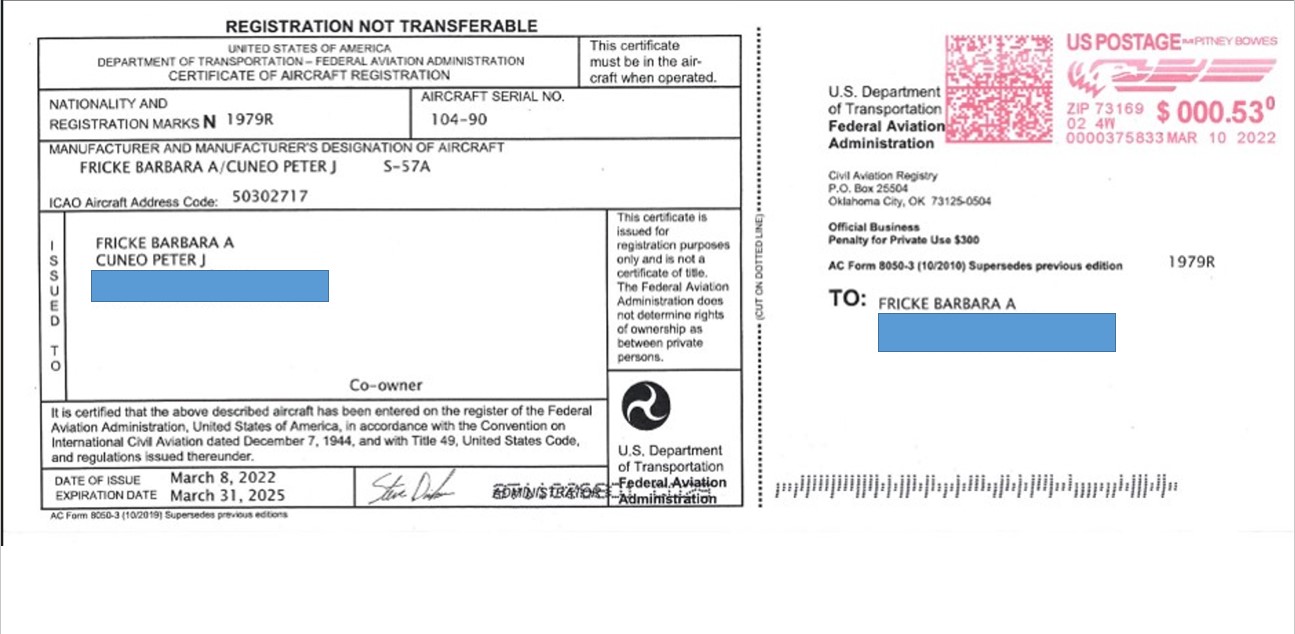
Next, the owner must register that N-number to a specific aircraft description and owner. Again, this can happen before the aircraft is built. In our case we stated that we were going to build a balloon, Model S-57A with serial number 104-90 registered to owners Barbara Fricke and Peter Cuneo. Oh, and don't forget to complete a notarized "Affidavit of Ownership for Amateur-Built Aircraft" along the way.
The FAA will also want to know if you are building this from a "kit" and/or where you purchasd the parts. Our "parts" were mostly rolls of fabric and reels of load tape and thread, with some cordage thrown in for good measure. No rivits. There is a nifty 14 page FAA Registration Guide that can help lead you through the process. Note: Model and serial number are chosen by the builder, not the FAA.
Next comes the small matter of building the aircraft. After the build is completed, the aircraft must be inspected either by an FAA employee or by an independent contractor called a Designated Airworthiness Representative (DAR) who is approved by the FAA. If you can cajole an FAA inspector to do the job, then its free, but if you have to use a DAR, it can cost upwards of $1,000 for the roughly three hour process.
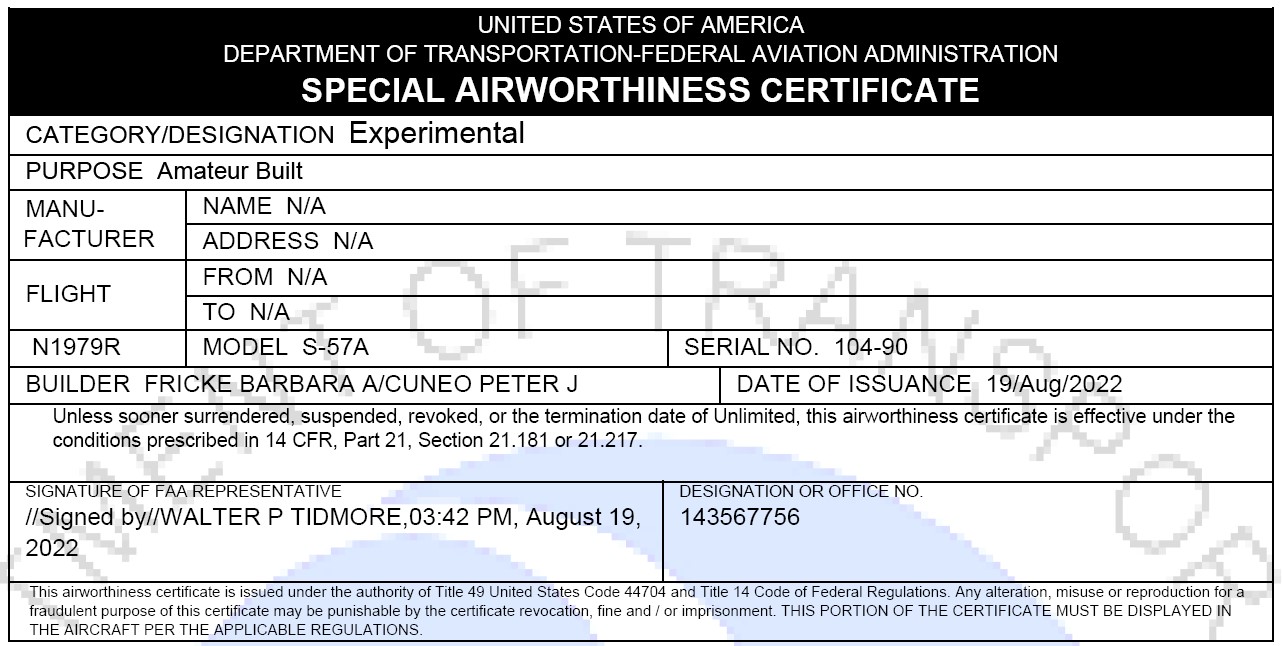
We were able to use an FAA inspector for our first two experimental aircraft, but those were friendlier times and we were forced to resort to a DAR for this aircraft. None-the-less, our DAR very efficiently checked our build-log, our paperwork, the construction quality and issued us an airworthiness certificate of the Experimental, Amateur Home-Built category.
Along with our Airworthiness Certificate we were issued a document called our Operating Limitations. This specified, among other things that we had to fly the aircraft with no passengers for its first ten hours of flight (called Phase I testing) to furhter prove its airworthiness. So we donned our test pilot garb, complete with crash helmet, leather jacket over a Nomex pressure suit and silk scarf and went airborne.
After the initial ten hours of fight we entered Phase II and can now carry passengers. However, our limitations further state that we are never allowed to perform any commercial operations with this aircraft. This is a blanket FAA stipulation for all Experimental category aircraft.
After this is all done, you know that you have built an aircraft, but more importantly, the FAA now agrees with you!